 | ||||
Monday, June 30, 2014


Saturday, June 28, 2014
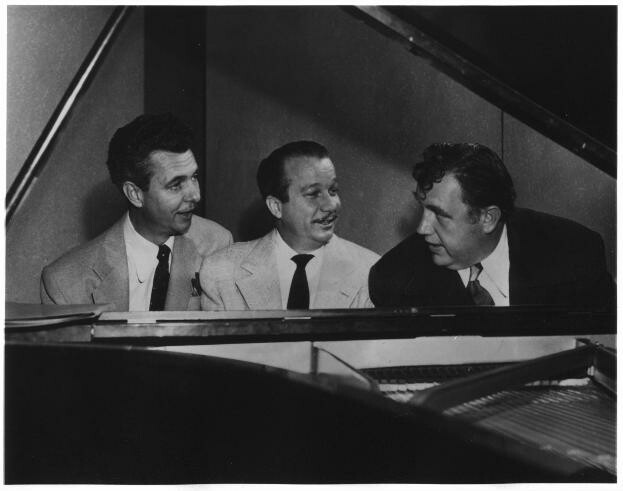
Comedy: Lum decides to become a piano tuner!
 |
| http://home.hiwaay.net/~ajohns/retro/SOMEONEWAITING.htm |
Lum and Abner, an American radio comedy which aired as a network program from 1932 to 1954, became an American institution in its low-keyed, arch rural wit. One of a series of 15-minute serial!
Enjoy listening! Lum decides to become a piano tuner
Sunday, June 22, 2014
Tuning a piano by ear. There is no better way.
"Why does Jurgen tune pianos by ear? Simply put, because he can.
Tuning aurally (by ear) is the time-honoured way to tune pianos. Aural
tuning involves listening closely to the individual strings, the
unisons, and intervals such as octaves, thirds, fourths, fifths etc.
The piano is a polyphonic instrument, meaning that numerous notes are
made to sound simultaneously. All these simultaneous notes interact and
have to blend in specific ways to create lush tone colours and
dynamics. In an aural tuning, these intervals are used to dial in the
perfect pitch of every note, according to how it sounds in conjunction
with others. For Jurgen, it makes little sense to tune individual notes
outside of a musical context with each other, which is what an
electronic tuner does.
While it is possible to achieve a good tuning with modern high-tech
aids, all too often the 'black box' machines are used as crutches by
those who did not benefit from the extensive training required to learn
the skill set required for aural tuning.
In the end, the human ear must be the final judge, so why not let ear
direct the process from the start?
Most of my distinguishing clients – professional musicians and teachers –
appreciate the method and care I use to tune their instrument and
prefer my work because I tune aurally."
Excerpt from:
Piano Forte Service and Piano Tuning
Excerpt from:
Piano Forte Service and Piano Tuning
Friday, June 20, 2014
What is a test blow?
This is a problem of terminology. For many people, "test blow" means something quite brutal. It should mean a sharp, staccato blow at FF to FFF, musically speaking. This does not mean with all the force your body is capable of, it means about the loudest the note will be played in a musical context. A large number of steady F blows will show stability (or lack thereof) very well, so there is no need for the higher volume and force, except in circumstances where there is a bunch of friction and you know you have turned the pin enough for pitch to change, and it hasn't."
-Excerpt from Fred Sturm, RPT, in the PTG Discussion Digest
-Excerpt from Fred Sturm, RPT, in the PTG Discussion Digest
Tuesday, June 17, 2014
A great advertising opportunity for piano dealers!
Piano Dealers in Canada, UK, & Australia:
Over the years we've had a number of inquiries from piano dealers (and tuners, teachers, etc.)from outside the U.S. about advertising on Piano World.
Now You Can!
We've been hard at work updating our Ad Management System to support ads from other countries. We started with Canada, UK, and Australia, although technically we should be able to support ads from any country.
Right now we're looking for a Piano Dealer from each country listed above to try our system and give us feedback in return for 90 days of free advertising (no strings attached).
If you are interested, please email me frank@pianoworld.com subject line: Dealer Ad Test.
Below I've included some stats for Piano World for an average 12 month period.
I suspect as we increase the ads from other countries our visits from these countries will go up.
Unique Visitors to Piano World Over 12 Months
1 United States 5,186,954
2 United Kingdom 757,738
3 Canada 570,021
4 Australia 332,289
5 Germany 168,241
Over the years we've had a number of inquiries from piano dealers (and tuners, teachers, etc.)from outside the U.S. about advertising on Piano World.
Now You Can!
We've been hard at work updating our Ad Management System to support ads from other countries. We started with Canada, UK, and Australia, although technically we should be able to support ads from any country.
Right now we're looking for a Piano Dealer from each country listed above to try our system and give us feedback in return for 90 days of free advertising (no strings attached).
If you are interested, please email me frank@pianoworld.com subject line: Dealer Ad Test.
Below I've included some stats for Piano World for an average 12 month period.
I suspect as we increase the ads from other countries our visits from these countries will go up.
Unique Visitors to Piano World Over 12 Months
1 United States 5,186,954
2 United Kingdom 757,738
3 Canada 570,021
4 Australia 332,289
5 Germany 168,241
_________________________
- Frank B.
Founder / Host
www.PianoWorld.com
www.PianoSupplies.com
Find Us On:
Facebook.com/PianoWorldDotCom
Twitter.com/PianoWorld
www.youtube.com/PianoWorldDotCom
Skype: PianoWorldDotCom
Estonia L-190, Yamaha P-80, Hammond XK-3, Hammond A-100, Estey 1895 Pump Organ
-------------------------
It's Fun To Play the Piano ... PLEASE Pass It On!
And please invite everyone you know to join our piano forums!
- Frank B.
Founder / Host
www.PianoWorld.com
www.PianoSupplies.com
Find Us On:
Facebook.com/PianoWorldDotCom
Twitter.com/PianoWorld
www.youtube.com/PianoWorldDotCom
Skype: PianoWorldDotCom
Estonia L-190, Yamaha P-80, Hammond XK-3, Hammond A-100, Estey 1895 Pump Organ
-------------------------
It's Fun To Play the Piano ... PLEASE Pass It On!
And please invite everyone you know to join our piano forums!
Sunday, June 8, 2014

Tuesday, June 3, 2014
Congratulation Paolo! You've come a long way in 35 years!
Five of six finalists choose the Fazioli at the 14th Arthur Rubinstein International Piano Master Competition!
First, second and third place all go to pianists on the Fazioli!
 | |||||||
| Paolo Fazioli at the distributor's showroom, N. Little Rock Arkansas | ca.1999 |
Steinway (Hamburg) Concert Piano Tech: "...we do not use [ETD's] at all..."
Comments starting at about 3.01.00 and 3.26.00
The 2014 Rubinstein competition
Additional information:
Is this the most powerful man in classical music?
Sunday, June 1, 2014
.JPG)
Friday, May 30, 2014
Memories of a piano technician (5): Searching for Rachmaninoff
 |
| The composer at his desk ca1941 |
How does one search for the dead? Sometimes a trip to the cemetery, a hunt for a headstone, plodding through census records. I took a different path and arrived at a more fulfilling destination.
My search for Rachmaninoff began when my sister acquired the Concerto for Piano in C minor featuring Van Cliburn on piano and the Chicago Symphony under Fritz Reiner. It was 1961. And I was hopelessly hooked. My parents had rented an old stencil upright from the local Steinway dealer and I was taking piano lessons everyday at elementary school. For our graduation recital I was tasked with learning and memorizing the composer’s Prelude in C sharp minor. It took most of the school year devoted to one piece. My hands were small, and so I had to improvise a bit, but for the most part the recital went fine.
My love of Rachmaninoff’s music never diminished. I added his third concerto and the second symphony to my list of favorites. Other works too. I also wanted to know more about the man. Eventually I read two good biographies and gained much insight thereby. I was especially moved by the events that led the composing of his second piano concerto.
A midlife career change placed me at the piano - not performing, but tuning, regulating and repairing. After tuning I often tested my work by playing a few bars of the Prelude as well as other pieces. It was during one of these little exercises at a Little Rock client’s home that an elderly relative in town for a visit asked me if I could play the entire Prelude or just snatches of it. She went on to tell me about attending a performance of Rachmaninoff's in Chicago. My appreciation for the composer being quite high, I really wanted to know more. However, I had a packed schedule that day and after exchanging a few words, I left for the next appointment.
I regretted not taking the time to learn more of the composer through her eyes. Eventually I shared my feelings with a client-piano teacher. With a rather puzzled expression she asked: “What could she have told you?” “That’s just the point,” I replied. “I’ll never know.” But all was not lost. Little did I realize that a better day was coming. And this time I would seize the opportunity.
A few years passed. Late one afternoon before tuning for a regular client we engaged in a little chat about art and memorabilia. I sat down to tune and he left the room. When finished he reappeared in the doorway with an old scrapbook in hand. “I have something to show you,” he said. Inside the book was an original hand signed 1932 program along with a review from the local newspaper. It was all about Rachmaninoff’s recital at a high school in a little swampy Arkansas town across the river called North Little Rock. The autograph was his. The event was sponsored by the Little Rock Musical Coterie. I asked to hold the book. I wanted to read and to touch both program and signature. It was a wonderful experience. But the best was yet to come.
I wanted to know more about the recital. I had no idea that the composer once performed in the area, but maybe others might. One-by-one I asked coterie members if they had knowledge of Mr. Rachmaninoff's performance. It was news to them - even among the oldest members. But I had one last client to visit with. Pat was a piano teacher - quite elderly - just old enough to remember. My appointment to tune her two Steinway pianos was a month or two away.
The day arrived. After tuning both pianos I asked her about the coterie event. “I’m sorry,” she said. “We were living in California.” No doubt she saw my disappointment. But it was soon allayed and for good reason. “But I did know Mr. Rachmaninoff.” Talk about unexpected. My jaw dropped to the floor. She then shared her story - at least some of it.
Going back to the days of her youth in California, walking through the neighborhood, strolling up one street and down another, she often saw an elderly man through a window either seated at a desk or standing. (I do not recall which.) As she walked by he would wave to her, and she to him. This went on for some time when her interest piqued and she asked her mother about the gentleman. “Who is the man down the street who always waves when I walk by?” Her mother replied, “That’s Mr. Rachmaninoff.”
At this point, Pat’s husband interjected. “I can’t believe Rachmaninoff came to North Little Rock. Back then it was mostly woods and swamp." The conversation moved to the less interesting. And then it was over. Was there more to the story? I do not know. She passed away shortly thereafter. However, for me it was enough. My search was complete.
BOB WIDDING
PIANO TECHNICIAN
2014
Tuesday, May 20, 2014
Memories of a piano technician (4): Lee Luvisi and David Itkin
 |
| From the Arkansas Symphony Orchestra program. Lee Luvisi and David Itkin. |
 |
| Review in the Arkansas Democrat-Gazette. Note to Piano Technician (me). |
I do have a story to accompany this, but I haven't written the piece for number 3 yet. Meanwhile, there is a thread about Mr. Luvisi here: Piano World Forum: Lee Luvisi
Can tuning neglect damage a piano? Quotables.
"When tuning has been neglected
for an extended period of time, the strings in the tenor, mid-range and
extreme treble have often dropped in pitch much more, in comparison with
the bass strings which have also dropped in pitch. The string tension
has decreased so much and unevenly, that the soundboard and bridges have
warped out of shape, placing tremendous strain on wood and glue joints,
risking severe damage."
- Guus van den Braak, Registered Piano Technician (Australasian).
- Guus van den Braak, Registered Piano Technician (Australasian).
“…pianos are designed to be at a specific tension. When
the tension is allowed to go flat the soundboard may flatten resulting
in less downbearing on the strings and an increase in the chance of wild
strings, cracks in the soundboard and case and frame parts separating."
- Cited from the Randy Potter School of Piano Technology, Inc. by Randy Potter, Registered Piano Technician, chapter 1.8 pg.16.
- Cited from the Randy Potter School of Piano Technology, Inc. by Randy Potter, Registered Piano Technician, chapter 1.8 pg.16.
"If the piano has fallen
substantially below pitch (i.e. from not having been tuned frequently
enough), the process of pulling the strings back up to pitch often
brings these little bends out into the speaking segment of the string
without having had the opportunity to straighten out gradually. A
competent tuner can usually remove these unwanted bends in the string,
but it's additional work, and you may get charged more. Some tuners who
are not so competent just leave them and hope they'll straighten out
over time. And sometimes, no matter how good the tuner is or how hard he
tries to remove a false beat, you're stuck with it."
- Piano Finders®
"Can the Piano Be Damaged by Not Having it Tuned?
"To keep a piano untuned for many years could do permanent damage to the piano. The strings are under a great deal of tension and tend to loose their tension over time. If the piano is kept untuned for too long you run the risk of the total pitch of the piano dropping. To bring the piano back to standard pitch may cause, at best, the necessity for several tunings over several weeks (at a higher cost) or, at worst, string breakage, and split bridges. Not only that, but playing on a poorly tuned piano can cause a potential musician to subconsciously not enjoy playing and hence, not wish to play."
- Carl Radford, RPT
"Distortion in sound. In rare cases major tuning work can bring bends into the speaking length of the string causing distortion in the sound. Restringing is the only solution in this case." - Daniel Berg, RPT excerpt from Results from years of neglect.
"The false beat is one of the tuner's worst enemies. This is a beat within a single string
that you can't eliminate by tuning. A string with a false beat sounds like two
strings that are out of tune with each other. False beats occur most commonly in the
upper middle register of the piano, from the treble break up to the middle of the top
octave.
"Other causes of false beats include rusty strings, kinked or twisted treble strings, and
strings that were stretched too much during stringing, pitch raising, or tuning. If you see
a kink or bend in the speaking portion of a string, try to straighten it by burnishing with
a steel rod. If this doesn't work, loosen the string and straighten it carefully with smooth
pliers. If it still sounds bad, replace it."
- Piano Servicing, Tuning, and Rebuilding,
Arthur A, Reblitz, RPT
- Piano Finders®
"Can the Piano Be Damaged by Not Having it Tuned?
"To keep a piano untuned for many years could do permanent damage to the piano. The strings are under a great deal of tension and tend to loose their tension over time. If the piano is kept untuned for too long you run the risk of the total pitch of the piano dropping. To bring the piano back to standard pitch may cause, at best, the necessity for several tunings over several weeks (at a higher cost) or, at worst, string breakage, and split bridges. Not only that, but playing on a poorly tuned piano can cause a potential musician to subconsciously not enjoy playing and hence, not wish to play."
- Carl Radford, RPT
"Distortion in sound. In rare cases major tuning work can bring bends into the speaking length of the string causing distortion in the sound. Restringing is the only solution in this case." - Daniel Berg, RPT excerpt from Results from years of neglect.
"Take care of your piano by not
neglecting it for extended periods of time. Piano strings stretch over
time, and if left untuned for long enough, a piano will require a major pitch raising when it is tuned again. A major pitch raising is not good for the health of your piano; it increases the possibility of breaking some strings and/or may introduce a permanent out-of-tune sound known as 'false beating.' " - Gooch Piano Service
"The false beat is one of the tuner's worst enemies. This is a beat within a single string
that you can't eliminate by tuning. A string with a false beat sounds like two
strings that are out of tune with each other. False beats occur most commonly in the
upper middle register of the piano, from the treble break up to the middle of the top
octave.
"Other causes of false beats include rusty strings, kinked or twisted treble strings, and
strings that were stretched too much during stringing, pitch raising, or tuning. If you see
a kink or bend in the speaking portion of a string, try to straighten it by burnishing with
a steel rod. If this doesn't work, loosen the string and straighten it carefully with smooth
pliers. If it still sounds bad, replace it."
- Piano Servicing, Tuning, and Rebuilding,
Arthur A, Reblitz, RPT
Sunday, May 18, 2014
Mark Cerisano RPT to offer special rate for tuning student subscribers.

|
Special Offer for HowToTunePianos Subscribers!by Mark Cerisano, RPT, B.Sc.(Mech.Eng.) |
For more info on how to subscribe: How to tune piano
Online lessons. Hurry, the deadline to sign up is fast approaching!
Thursday, May 15, 2014
Do you set the temperament using the 4ths/5ths sequence? If so, please pay attention!
The manual I first studied from, a correspondence course (whose name I will not write on here but which is still very commonly purchased), gives that same 4ths & 5ths sequence but provides NO information regarding Rapidly Beating Intervals (RBI). None of the checks that we all supposedly should know but instructions to "back up" when the sequence doesn't work out.
The most recent book on tuning does the same thing in its simple version of temperament. All the checks that should be known are much later in the book.
Quite often, I have seen technicians write that they had a problem discerning the RBI's but could easily hear 4ths & 5ths. A sequence that begins with a set of four Contiguous Major Thirds (CM3) seems so difficult to many but that 4ths & 5ths sequence seems easy, so that is what they use.
So, as hard as you may find it to believe, most (I would say 9 of 10) technicians who find the RBI's too difficult to discern, begin each time they tune a piano, to tune a Well Temperament (WT) exactly a** backwards. (The "a** backwards" title is what my father used to call what someone did who did not know what they were doing. Put the part on upside down or backwards and leave it that way and not ever know the difference and not even care that they didn't know the difference and would resent anyone who may point that out.)
Here is a link to a video (under 2 minutes) that shows exactly how it occurs. You will note that all of the 4ths & 5ths I tune sound apparently "good". The one and only check that I did (the only one some people may know, if they know any at all), shows the F3-A3 M3 beating very similarly to the F3-D4 M6. They are both too fast but if a technician had never learned all of the RBI checks, that check may have sounded just fine!
Bill Bremmer, RPT, on "Reverse Well."
From Piano World Forum
Wednesday, May 14, 2014
It pays to use a qualified professional (2): The Antique Dealer
Then, there is the
prospect who purchased a used console. It looked great. The antique
dealer thought it was a good piano as well. So the person laid out
almost enough cash to buy a new one.
Later, when the piano tuner came by to service the instrument, he, too, couldn't believe how nice the piano looked. It was as if the thing had been in a time capsule. That is, until he looked inside.
Was something wrong? It would be easier to ask if anything was right. Nothing was right. Nothing. Yes, it looked like a piano. Sure enough, it even had 88 keys. But that was about it.
The cost to make the piano tunable exceeded the price of a similar new instrument. Add this to the money already invested, and there is only one word to describe the situation: Sad.
For this prospect the lesson was hard-learned. It doesn't have to be so for others.
BOB WIDDING
PIANO TECHNICIAN
Much more here: CLICK HERE
Later, when the piano tuner came by to service the instrument, he, too, couldn't believe how nice the piano looked. It was as if the thing had been in a time capsule. That is, until he looked inside.
Was something wrong? It would be easier to ask if anything was right. Nothing was right. Nothing. Yes, it looked like a piano. Sure enough, it even had 88 keys. But that was about it.
The cost to make the piano tunable exceeded the price of a similar new instrument. Add this to the money already invested, and there is only one word to describe the situation: Sad.
For this prospect the lesson was hard-learned. It doesn't have to be so for others.
BOB WIDDING
PIANO TECHNICIAN
Much more here: CLICK HERE
Monday, May 12, 2014
It pays to use a qualifed professional (1): Piano moving.
One case comes to mind where a pianist wanted to move his grand piano from the den to the living room. With an open floor plan it looked easy enough. He even called the piano store that sold him the instrument and asked if it could be done without having to pay piano movers. "Sure," the salesman said. "Just roll it in there."
And so, he did, leaving some 20 feet of ruts in his brand new hardwood floors.
If it pays to use a qualified professional, it doubly pays to first call the right one.
BOB WIDDING
PIANO TECHNICIAN
Much more on this topic: CLICK HERE
Thursday, May 1, 2014
Wednesday, April 30, 2014
Monday, April 28, 2014
Update: Company loaning pianos to those afffected by the tornado!
June 4, 2014. Richard Deutsch, owner of Piano Kraft in Little Rock, joined forces with
Yamaha Corporation of America to provide $36,000 worth of Clavinova
digital pianos on loan for a year to churches and schools in the
tornado-ravaged areas of Mayflower and Vilonia. Story here:.Log Cabin Democrat news story
Devastating. Much loss of life and property. Our prayers go out to the families in all areas affected especially Vilonia (pictured above) which was also hit in 2011.
Massive tornado crossed I-40 last night at Mayflower 9
miles south of Conway and tore through Vilonia.
 |
| PHOTO BY BRADLEY WIDDING |
 |
| PHOTO BY BRADLEY WIDDING |
 |
| GOVERNOR OF ARKANSAS. PHOTO BY BRADLEY WIDDING |
Devastating. Much loss of life and property. Our prayers go out to the families in all areas affected especially Vilonia (pictured above) which was also hit in 2011.
More photos:
Subscribe to:
Posts (Atom)